
This Writer's Life
TFP revisits a favorite conversation with writer Tobias Wolff about war, family, memoir, and the ethics of storytelling.
FROM THE ARCHIVES
Sept. 22, 2023
By Michael Judge
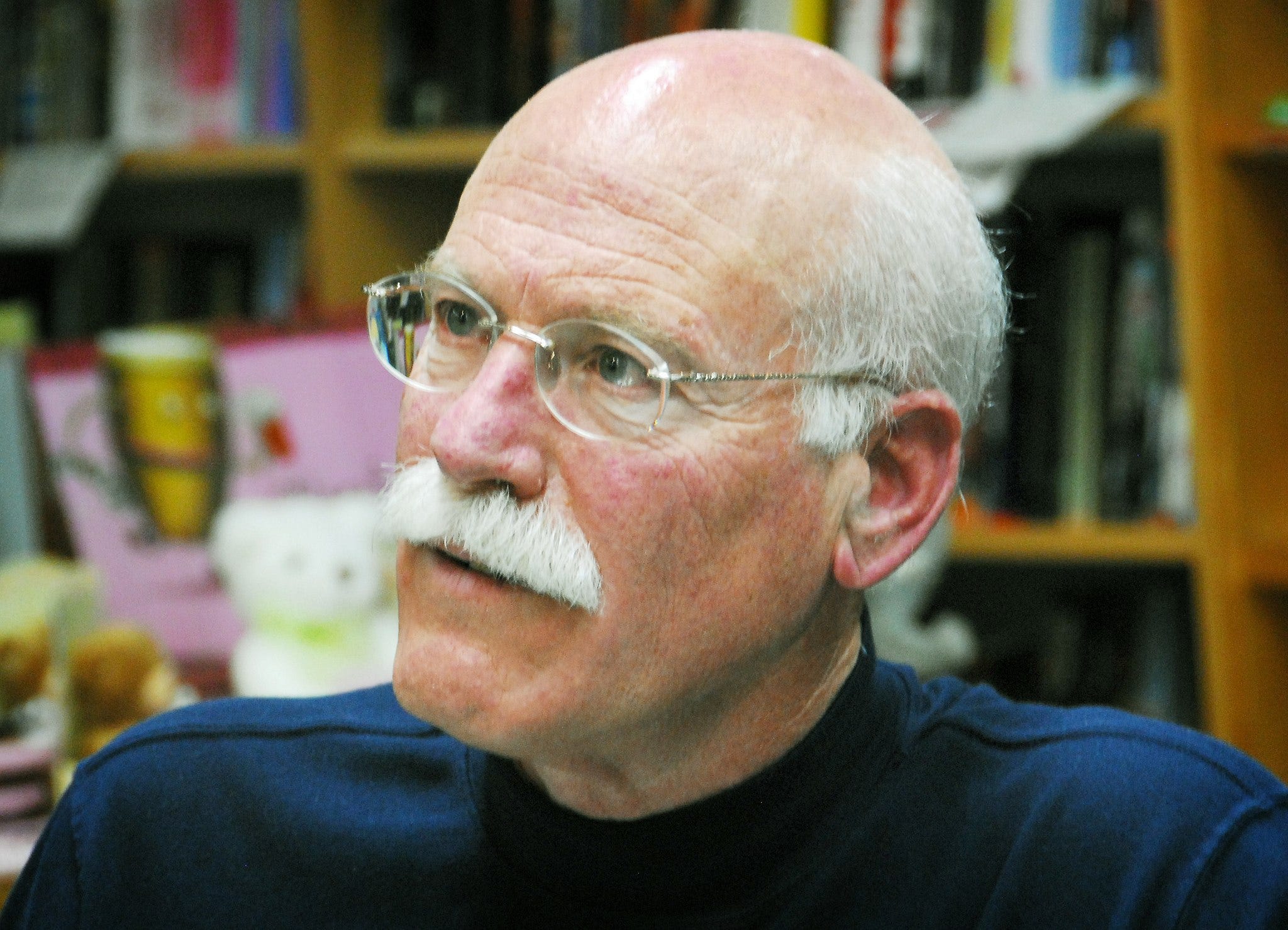
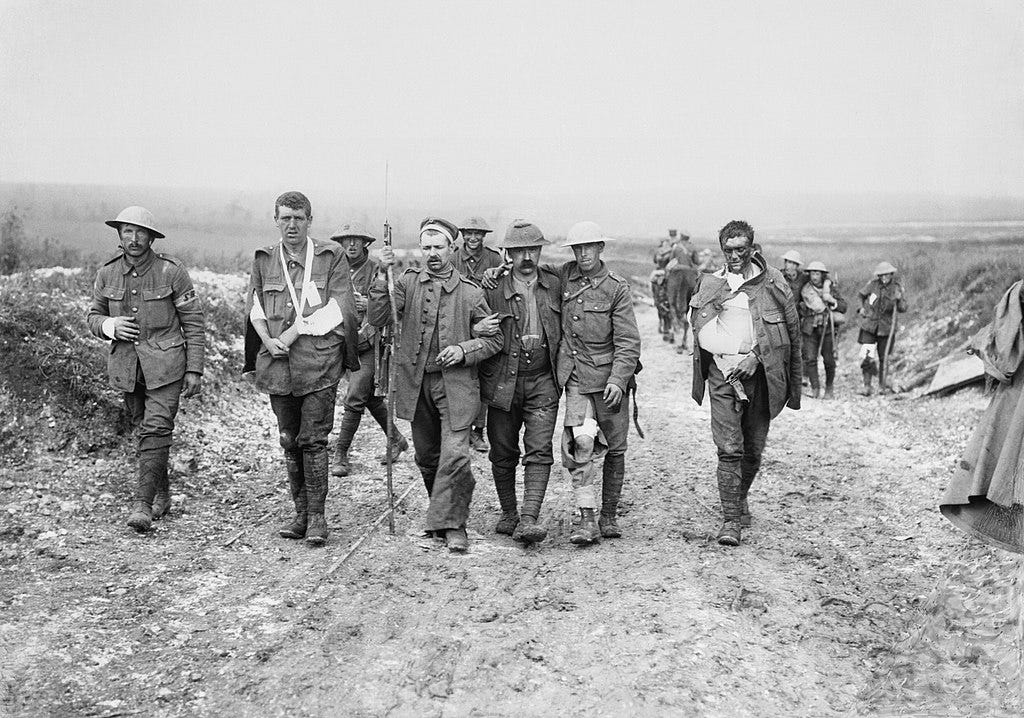
On Memorial Day weekend I got an email from Tobias Wolff, author of the acclaimed memoirs This Boy’s Life and In Pharaoh’s Army, and one of my writing heroes as a young man. I first met Wolff at a 2017 tribute to his friend, my teacher, Denis Johnson, whom we both loved like a brother. We’d exchanged a few emails over the years—mostly after I excitedly (and embarrassingly) sent him something I’d just written—but still, I was surprised to get his email calling my Memorial Day piece “In Flanders Field” a “fine column” about a “great poem.” The poem was written in 1915 by Lt. Col. John McCrae, a Canadian poet, soldier, and physician who tended to wounded soldiers during World War I in some of the bloodiest battles on the Western Front, where at least four million perished.
Wolff’s email continued:
I can’t help thinking of a poem by Wilfred Owen, who was killed in the last days of WWI. He tells the story of Abraham and Isaac, as we know it, up to the point where they reach the place on the mountain where Abraham thinks he's supposed to sacrifice his son. Then, as in scripture, God offers him a way out: Instead of Isaac, he can sacrifice a ram caught in a thicket, identified in the poem as “the Ram of Pride.” The poem, “The Parable of the Old Man and the Young,” concludes:
But the old man would not so, and slew his son,
And half the seed of Europe, one by one.
Every year at this time I think of that poem, and the friends I served with and lost in Vietnam, one in particular, a medic [I call Hugh Pierce in my memoir In Pharaoh’s Army]. I still miss him. Always will.
peace,
Tobias
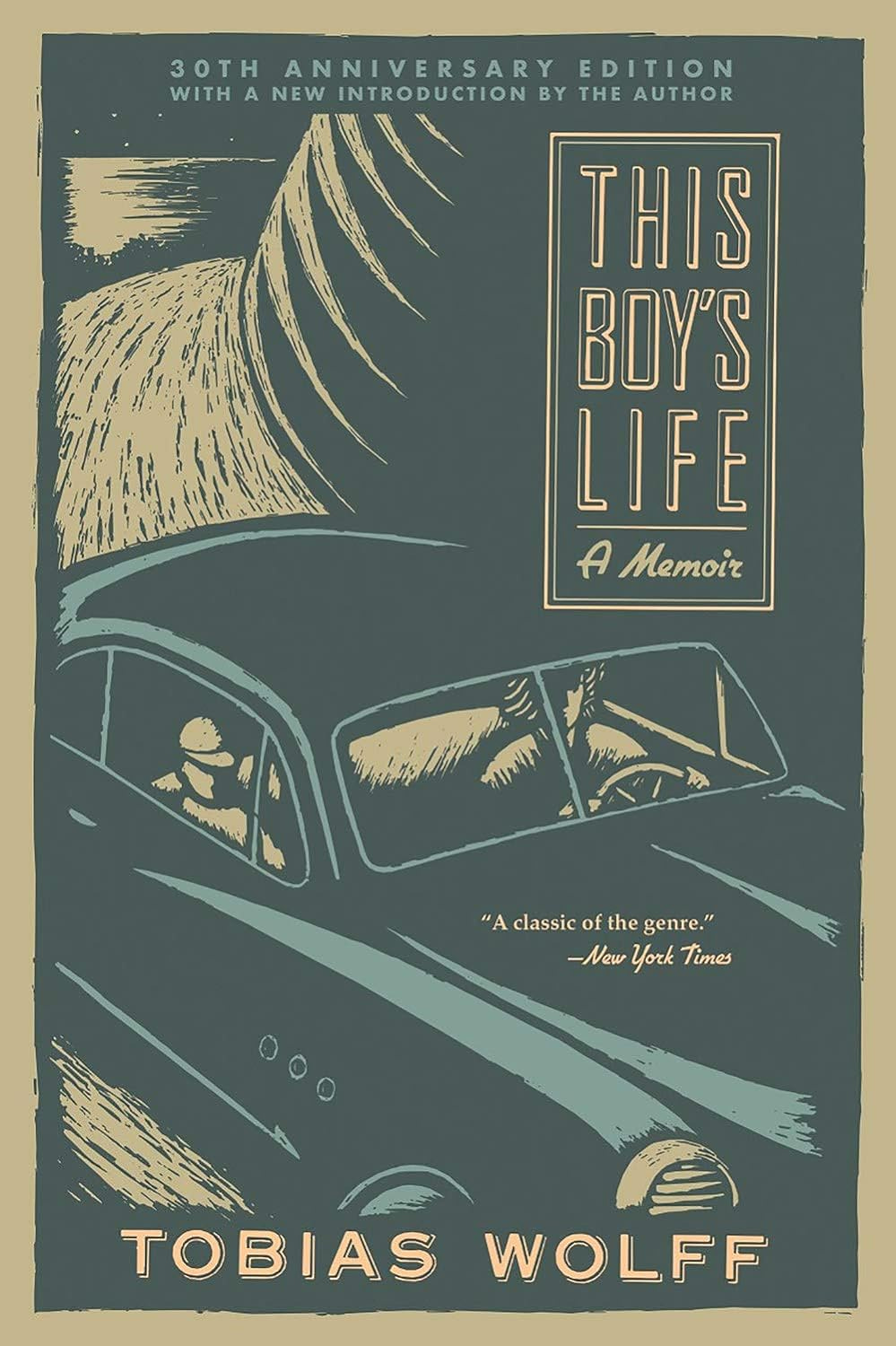
The note moved me greatly, and I decided then and there to revisit In Pharaoh's Army: Memories of the Lost War, first published in 1994, and to invite Wolff to a TFP conversation as soon as possible. His masterful 1989 memoir This Boy’s Life, still considered a classic of the genre, spoke to me like few books had. Wolff, who in the memoir demands to be called “Jack” after his literary hero Jack London, came of age in the 1950s. I came of age in the 1980s. But our experiences—Wolff’s in Concrete, Wash., mine in Mason City, Iowa—rhymed in crucial ways, and his power and precision as a storyteller made me want to become a writer.
The New York Times called This Boy’s Life “absolutely clear and hypnotic”—and it was, casting a spell on young writers and wannabe memoirists who thought to themselves: “This looks easy!”
Alas, they soon found out, as did I, that it’s not.
Still, Wolff, who turned 78 this summer, and painstakingly rewrites and rewrites and rewrites some more—makes it seem so. In all his books—which include four collections of short stories, three novels, and two bestselling memoirs—one marvels at his clarity and control, and how, with a stoic’s clear-eyed vision, he guides us to the truth in an often muddled and violent world.
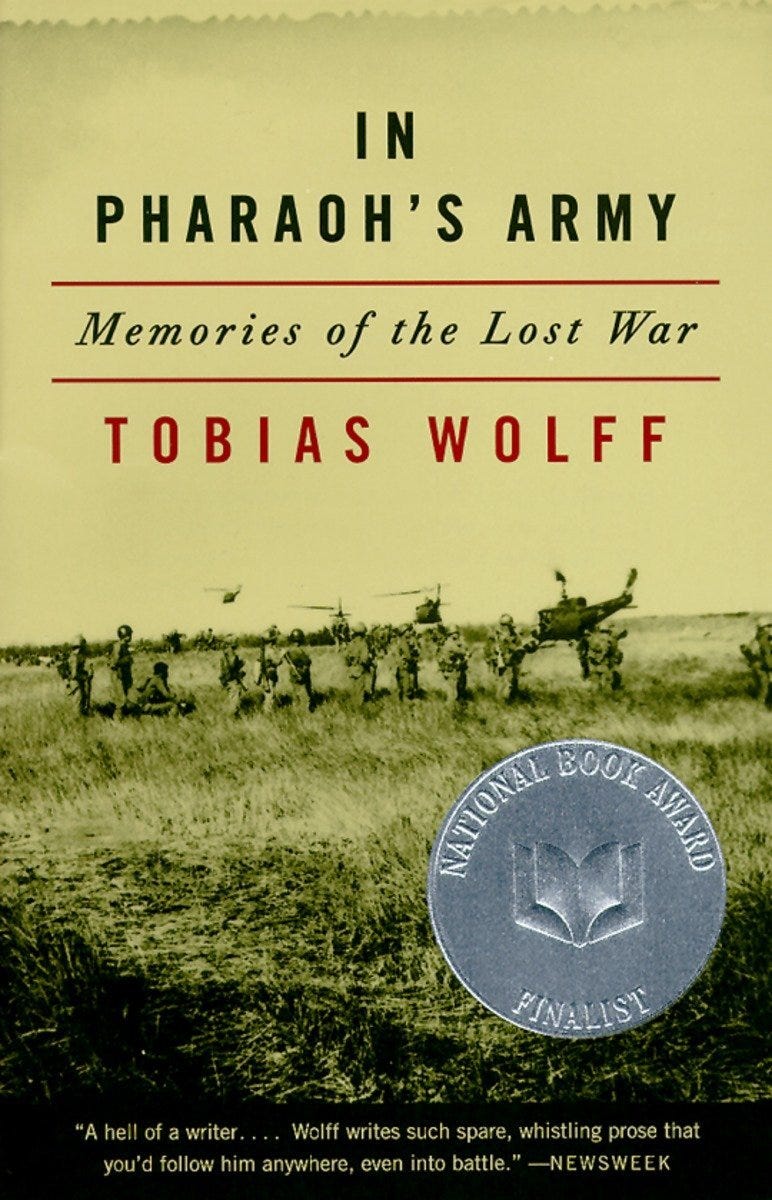
Nowhere is this truer than in his second memoir, In Pharaoh’s Army, which deals largely with his experiences as a young U.S. Army officer stationed with South Vietnamese Army soldiers near Mỹ Tho before and during the Tet Offensive. Wolff served in the U.S. Army from 1964 to 1968, but the memoir also touches on his postwar studies at Oxford and early failures—and breakthroughs—as a writer grappling with the subject of his own life, and the lives of those around him, and finally finding the right rhythm to tell what needs to be told:
“There was the pleasure of having words come to me,” Wolff writes near the end of In Pharaoh’s Army, “and the pleasure of ordering them, re-ordering them, weighing one against another. Pleasure also in the imagination of the story, the feeling that it could mean something. Mostly I was glad to find out that I could write at all. In writing you work toward a result you won’t see for years, and can’t be sure you’ll ever see. It takes stamina and self-mastery and faith. It demands those things of you, then gives them back with a little extra, a surprise to keep you coming. It toughens you and clears your head. I could feel it happening. I was saving my life with every word I wrote, and I knew it.”
When I spoke with Wolff from his home in Palo Alto, Calif., near Stanford University where he teaches creative writing, he was hard at work on a new book he hoped to have finished months ago, but couldn’t seem to stop rewriting. I didn’t ask him about the new work, knowing most writers prefer not to talk about a work in progress, feeling—and rightly so—it might taint the process.
I called from Tokyo, never once mentioning his current project, but knowing just the same that, well into his seventh decade on this planet, he was, once again—like all my favorite writers—saving his own life with every word.
MJ: I want to start out by saying thank you so much for your kind words in regard to TFP, The First Person.
TW: I read it. I read it whenever you have one out. I like it. I like its honesty and it’s always interesting.
Thank you. And thank you for your notes of encouragement. Our sort of on-and-off-again correspondence has been inspiring. I think we first met, if you recall, at the Denis Johnson tribute at the Iowa Writers’ Workshop after his death in 2017.
That’s right.
You read a beautiful remembrance of Denis and spoke about how you two became friends in Phoenix in the late 1970s. Years later, Denis was my teacher in the poetry workshop at Iowa, and he was a very big influence on me. If memory serves, you also spoke about Jesus’ Son and the innocence at the heart of Denis’s work.
Yes, exactly.
I experienced that firsthand. I was wondering if you could just tell me a little bit about how you got to know him and what that relationship was like?
We had a pretty close relationship for a brief amount of time, and then I didn’t see him for years on end. But we met in Phoenix. I had gone there to teach at Arizona State and Denis was living there in recovery at the time from the difficulties that he’d been living with and was sober and working on staying that way.
I met him through some friends who were poets, Norman Dubie and Pamela Stewart, who had known him earlier. I started reading his poems after we met and loved them. They’re completely original. There’s no one who sounds like Denis, and as original as they are, they are unmistakably meant. They are intended. They are from, I guess what you’d call the heart. He’s not messing around. He can be very funny, but he’s also very serious. And I found that to be an aspect of his personal character too.
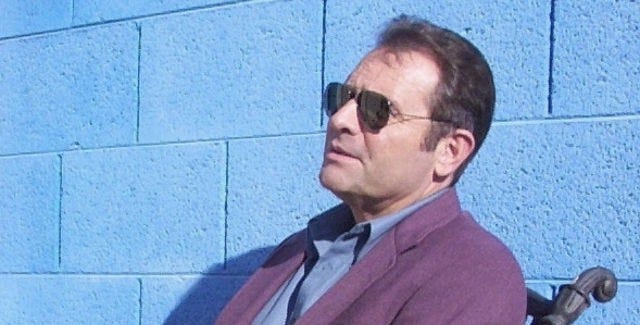
What was on the page was coming right out of that man without affectation. Actually at the time he was looking for a church to go to. So he and I started going to Mass together—not every Sunday, but now and then, and we stayed in touch. I left Phoenix after a couple of years. We stayed in touch, very fitfully through the years. I was down at Syracuse University teaching there. I had him out to Syracuse to read a couple of times. And then again, when I came to Stanford, I had him come here and read.
My daughter, Mary Elizabeth, meeting him and hearing him read, developed a great crush on him and on his work. She was in high school at the time, but it was like meeting a real celebrity for her when she met Denis. So I love the guy. I’ve never known anyone quite like him and I really, really loved his work, especially Jesus’ Son. But also Tree of Smoke I think is extraordinary. And the poems. The Incognito Lounge is one of my favorite more or less contemporary collections of poetry. I just love that.
Well, when I was a youngster at the Iowa Writers’ Workshop, he had just published Jesus’ Son, but he was to us poets like a God. Years later, I wrote a TFP piece about how much we worshipped him. We couldn’t get enough of Incognito Lounge and The Man Among the Seals . . .
The Man Among the Seals!
Yes. Denis’s first book of poems. The great Kim Merker, who was one of my teachers at Iowa too, founded the Stonewall Press and Windhover Press. He actually published Samuel Beckett and Ezra Pound’s last books, and he published The Man Among the Seals, Denis’s first book.
Wonderful. Wonderful.
And it’s handset type and it’s absolutely beautiful. I actually lifted it from the University of Iowa when I was an undergraduate and I felt so guilty that I returned it along with some other books about 18 years ago.
Good for you.
I couldn’t believe I did such a thing. I had a bad habit of not wanting to wait in line to check things out. So I would walk quickly through the gate at the library and hold the book above my head so that the alarm wouldn’t go off. Another was a first printing of Rene Char’s Hypnos Waking in translation, and I returned that as well.
I made sure I took them straight to the rare books collection and handed them to a librarian. She looked kind of puzzled and said, “Where did these come from?” And I said, “You don’t want to know.” And I gave them to her and walked away. Making up for past sins.
Anyway, Denis told me a great story once. We were walking from the English Philosophy Building on the Iowa campus up to The Mill where we would go after workshop sometimes for drinks, Denis always ordering Dr. Pepper. “Don’t listen to people in workshop if you don’t agree with them,” he said. “Your instincts as a writer are what’s most important here.”
Then he told me a story about “Car Crash While Hitchhiking,” the mind-blowing first story in Jesus’ Son. He said he’d sent it to The New Yorker first and they said, ‘“Oh, we love it, except we want you to get rid of that last line: And you, you ridiculous people, you expect me to help you.’” And he said, “What? That’s the whole story, man! If you don’t want that last line, you don’t have to publish it.” Right?
Right.
So he basically said “Screw you” and sent it to The Paris Review. And that’s where it appeared—with everything, including the last line—intact.
Good for him.
So that was sort of his lesson in integrity and not taking this workshop business or a magazine editor too seriously when it comes to the heart of your work.
Right. And that took some guts to pull a story back. I’ll tell you someone else who did that too, and he needed the money, he needed the publication. Andre Dubus, a great short-story writer. Had some luck. He placed a couple of stories in The New Yorker and he was just out of the Marine Corps, had a wife and kids and he was trying to support himself. He was teaching four classes every semester at a women’s college in Merrimac, Mass.
But he pulled the story back from The New Yorker because the then-editor objected to his using the word diaphragm—the device that a woman might use then to prevent pregnancy. And they didn’t want him to use that and wanted to take some line out. He pulled his story back and he went years without publishing. He did eventually start publishing there again but much later. And that really cost him something.
I always admired his integrity for insisting on what he thought of as the veracity of his work and the world that he was making it in and being true to that at some expense. I’m lucky I haven’t encountered that sort of thing myself in my writing. I’ve had a couple of tussles with editors over the years, but nothing like that. And I’ve never had to pull a story over anything or even attempted to, but that would be Denis for sure.
I think what Denis told me—and I think I’m getting it right—The New Yorker was going to give him at least several thousand dollars for the story, maybe $5,000. The Paris Review gave him $500, and he was happy with it.
That’s great. That’s great.
In your work you deal a lot with, especially in This Boy’s Life, lying and liars and sort of the embellishments or myths that people create around their ordinary lives. In the book, you take on the name Jack in honor of your favorite author growing up, Jack London. I was wondering . . .
Friends from that time still call me that. I mean, even though I haven’t seen a lot of them in many years, but I’m still in contact with a couple of the guys I was close to in those years, between the time I was about 11 and 12 and 16. And they still call me Jack.
That reminds me of a beautiful line by Victoria Amelina, the Ukrainian poet and novelist, and also a writer of children’s books. She was murdered by the Russians this summer. I’m still ripped up about it . . .
God that’s sad.
She has this beautiful line from a 2016 essay “The Peter Pan Effect.” She says it’s worth learning to speak “to a child in the way you would have liked to be spoken to. And you should also write like this—as if for a distant little self. And despite your age, hope cautiously for the Peter Pan effect, which could fix something over there, far away, in the once little you.”
Wonderful. That’s a great line.
Isn’t that beautiful?
Yeah, that’s really beautiful.
In some ways I get that same sense reading your memoirs. There’s a tone where you go from the experience as you lived it to your understanding of it in the present, which to me is sort of you speaking to that child that she talks about. As if you could fix something far away . . . in the once little you. I was really struck with that feeling most recently in your book In Pharaoh’s Army because I just finished reading it again. But in This Boy’s Life too, it strikes me that there’s something very true about what she’s saying and that maybe that’s what we’re getting at with memoir—and why we have to return to these stories over and over again.
Right, and of course in writing something like that, it’s sometimes a hard negotiation between the you who has survived the times that you’re writing about more or less successfully, and come to wisdom and balance that you did not have at the time. So you want to honor the feelings and thoughts that you really had then. You don’t want to be imposing your present kind of maturities and sophistications on someone who didn’t have them at the time and who in some ways suffered for not having them, who would’ve benefited greatly from having them. You have to practice a kind of restraint and not artificially cushion the person you were then in writing about that person with present bromides and reassurances. Because they were on their own then. They didn’t have you looking over them and seeing how things were going to end up later. So you have to preserve in some way the—how can I put it?—the independence of that young person you’re writing about or younger person from your present self. It’s a trick: You can’t entirely efface the person that you are now, writing about it, but you have to find some way of keeping those realms distinct.
MJ: I guess Heraclitus was right: “No man ever steps in the same river twice, for it is not the same river and he is not the same man.” My old teacher, the poet James Galvin, who wrote a beautiful memoir called The Meadow . . .
TW: I love that book.
It’s extremely lyrical and at the same time brutally honest. But Jim says in one of his poems, “You can’t step into the same river even once.”
That’s good, isn’t it?
Yep. Galvin’s got this sort of mystical sense of nature and man’s relationship to it and it’s absolutely true. I’ve found that when I’m trying to write memoir, my biggest pitfall is the present tense, which I try to avoid now. By putting it in the present tense, much like a poem, I wasn’t protecting that child from a distance, I was becoming that child again, and that wasn’t good for the writing. Like you, I had kind of an erratic upbringing in some respects. My mother divorced my father and we drove from the Bay Area to Iowa in 1977 in a tiny Datsun, my 16-year-old brother John driving the U-Haul full of our belongings. A few years later all hell broke loose when my oldest brother, Steve, a cadet in the Air Force Academy, and then John, a football star, were both diagnosed with schizophrenia. Anyway, I found that by going into the present tense, I was too present in those experiences. I’m now putting it fully in the past tense, which helps me look at that child or that younger person with the experience that I have now. Does that make sense to you?
Yes it does. It gives you the longer view, definitely.
I think there’s a kind of romanticism to that sort of Holden Caulfield voice that is extremely difficult to pull off, especially if it’s not a novel or a novella or something like that. But I also get that sense in In Pharaoh’s Army of you looking back on your life, long after the war in Vietnam, and your sense of responsibility to the story but also to the right tone. There’s this great line when you say—I think this is when you’re with your girlfriend, Jan, and Dicky and Sleepy, two enlisted men you served with, in a bar shortly after you’ve returned home . . .
Oh, those guys at the end, right?
Yeah. You’re telling a story about an ill-advised Chinook helicopter landing, how the storm from its blades blew away the locals’ homes and lives, and you’re trying to find the right tone for the occasion, and you say: “How do you tell such a terrible story? Maybe such a story shouldn’t be told at all. Yet finally it will be told. But as soon as you open your mouth you have problems. Problems of recollection, problems of tone, ethical problems.”
That’s right.
What do you mean by “ethical problems”?
Well, it’s a story of that kind in particular, but really I would say this would be true of any memoir. It’s not only your own character and experience that are implicated in the story you’re telling. They impinge on other people’s lives too. They draw on other people’s lives and experience. For example, with the whole episode with calling that damned helicopter down rather thoughtlessly into where the gale of the blades would cause damage, just not thinking. You could make a comical scene out of it but that would ignore the actual experience of the people who lived in these places whose roofs were being blown all over creation and whose illusion of safety and security was being suddenly shattered.
So your story is touching other lives and it can do so in—how can I put it?—in a careless and consequential way. You’re not alone in this world. Your life touches other people’s lives and you have to recognize that without necessarily being inhibited by it. And that’s always the problem with writing a memoir. Your life . . . this account you’re making of a life, is actually an account of other lives too, and you’re making or suggesting judgments about other people’s characters. At some level you have to eventually say, “Yeah, I’m doing that, but I can’t let that put a muzzle on me. The knowledge that I am doing that cannot shut me up.” But you take that on when you write a memoir. You’re going to be stepping on other people’s lives.
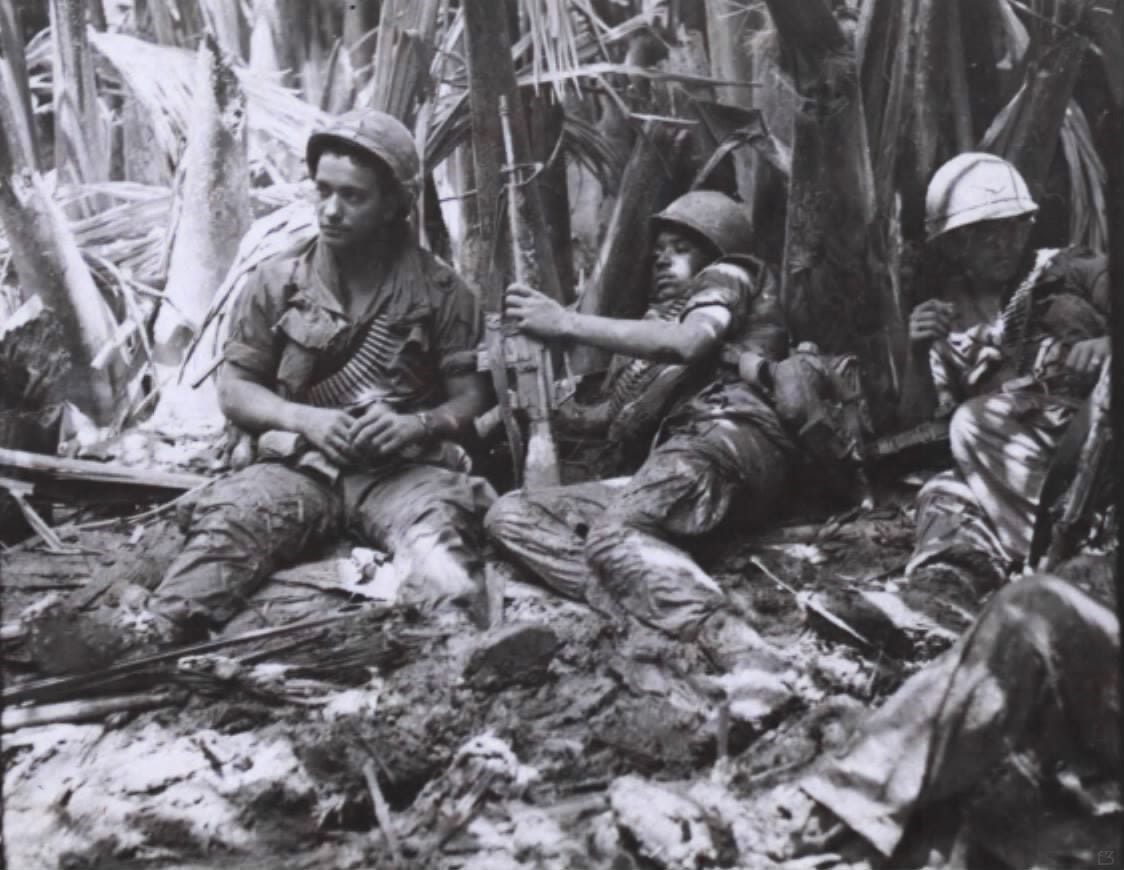
There’s a passage in the book where, after the war, you come across a line in George Orwell’s essay “How the Poor Die” that infuriates you. “Orwell had me in the palm of his hand,” you write, “till I came to this line: ‘It is a great thing to die in your own boots.’ It stopped me cold. Figure of speech or not, he meant it, and anyway the words could not be separated from their martial beat and the rhetoric that promotes dying young as some kind of a good deal. They affected me like an insult. I was so angry I had to get up and walk it off. Later I looked up the date of the essay and found that Orwell had written it before Spain and World War II, before he’d had a chance to see what dying in your boots actually means. (The truth is, many of those who ‘die in their boots’ are literally blown right out of them.) Several men I knew were killed in Vietnam. Most of them I didn’t know well, and haven’t thought much about since. But my friend Hugh Pierce was a different case. We were very close and would have gone on being close, as I am with my other good friends from those years. He would have been one of them, another godfather for my children, another big-hearted man for them to admire and stay up late listening to. An old friend, someone I couldn’t fool, who would hold me to the best dreams of my youth as I would hold him to his.”
It’s a figure of speech Orwell was using and I probably came down on it a little hard, but it did affect me when I read it. I thought, “Oh, you don’t know what that means.” And he didn’t actually know what it meant, but he came to find out. I love Orwell though. I’m loath to criticize him about anything. And I love the essay that that comes from, or the recollection that that comes from.
In your email to me on Memorial Day [see here], you were kind enough to write about Hugh’s death and the Wilfred Owen poem, “The Parable of the Old Man and the Young.” And in the book, there’s a beautiful line about how someone dies in your stead, I mean literally in your stead. This is a little close to the bone, but when it came to In Pharaoh’s Army, did you feel you had to tell these stories because you’re alive in Hugh and other men’s stead, and at the same time had to get it right?
That’s right. You owe them that. I mean, in deciding to write about that experience at all, I did think that I owed it to the man that I call Hugh in the memoir and others that I knew to be as truthful as I could be to get it right. Not dramatize it or melodramatize it. Just to try to get the feeling of the experience really down truthfully. I didn’t want it to become a kind of screed, a denunciation of the war. And in fact, a couple colleagues of mine criticized me for it. “Why don’t you come to a clearer conclusion about the folly of the war?” and all that. And it just seemed to me we didn’t have the luxury at the time of thinking that way. We might have had our suspicions, but that wasn’t part of our experience except in the soldierly conversations and banter about the idiots, the higher ups, that kind of thing.
So I really wanted to—how can I put it?—I wanted to keep it true to the experience that we actually had there and that is the best way that I could think of honoring [the man I call Hugh in the book]. I’m going to call him by his real name now, in our conversation, but please edit that out. I mean, I can’t keep calling him a pseudonym. He was my best friend at the time . . .
Right.
He was such a wonderful guy.
Well, I’m honored that you felt comfortable enough to share his name with me and how you felt about him. And the poem that you . . .
It’s so strange. I still feel a kind of absence in my life with him not in it. I’m very close to friends that I was . . . You know, my best friend in the world I’ve been best friends with since we were 16. I’m his daughter’s godfather. He’s my daughter’s godfather. We see each other whenever we can. I have another friend that I’ve been friends with who I’m still very close to, since we were in high school in Concrete together, and we email a lot. Those connections have abided for me. So when one got broken in such a way, it just never really healed.
I wasn’t familiar with “The Parable of the Old Man and the Young” until you quoted it in your email. Most people are familiar with Owen’s poem “Dulce et Decorum Est” or “Anthem for Doomed Youth” but…
“What passing-bells for those who die as cattle?” right? And “The old Lie: Dulce et decorum est / Pro patria mori.” But God, I love that Abraham and Isaac poem.
God ordered Abraham to sacrifice his son and a ram appears and is slaughtered in Isaac’s stead, right? That’s the biblical story. But in Owen’s poem, tragically, that’s not the case.
Right.
Owen writes:
. . . Lay not thy hand upon the lad,
Neither do anything to him. Behold,
A ram, caught in a thicket by its horns;
Offer the Ram of Pride instead of him.
But the old man would not so, but slew his son,
And half the seed of Europe, one by one.
Exactly. I have to say, looking back on it, it isn’t something I wanted to make much of in the memoir because I had a different project in mind than, as I said, writing a screed. But I think of the pride that kept that folly going for so long. People just unwilling to admit that it was a folly and a mistake and just pouring more into it, more people into it, more . . .
Well, I want to say once again, I’m sorry for your loss and the loss of your friend.
Thank you. I appreciate that.
We’ll wrap up soon. But I wanted to say that one of the things I most admire in your work, your memoirs especially, is there’s not a trace of self-pity.
Honestly, I just feel like I’ve been so much more lucky than unlucky, that I’ve had so many breaks as opposed to bad breaks. That I’ve enjoyed such friendships and very few enmities. I don’t have a lot to feel sorry for myself about, to tell you the truth. I mean, I had certainly a bumpy youth in some ways, but I also had a great mother. And boy, you have a parent like that, they really carry you.
Right. I’m glad you mentioned your mother. I think especially in This Boy’s Life, there’s a sense of adventure and not an inkling of self-pity. That sense of adventure, it seems, came from your mother. My mother was the same way. She’s brave. The bravest person I know. And I think part of that was getting in that little Datsun and driving all the way from California to Iowa. She kept telling us that we were going to see the Northern Lights when we got to Iowa. And Iowa’s pretty darn far away from the Northern Lights, right? But one night she put sleeping bags in the backyard and we all fell asleep waiting to see the Northern Lights, and it was just beautiful. I feel like I had a wonderful childhood even for all the pain that accompanied it.
I know exactly what you mean.
I’m so grateful we were able to have this conversation.
Well I’m glad we were able to as well.
At the risk of sounding very corny, you remind me of the man my older brother Steve might have been had he not been stricken with schizophrenia.
I’m honored.
Your writing—your voice, tone, and refusal to descend into irony or bitterness—is a real triumph, and I see it as a model.
Thank you, Michael. I hope we’ll talk again someday.

TFP IS A PROUD MEMBER OF THE IOWA WRITERS COLLABORATIVE

One of my favorites authors as well. I read all his books.