
Sergey Maidukov: Learning the Difference Between Thunder and Bombs
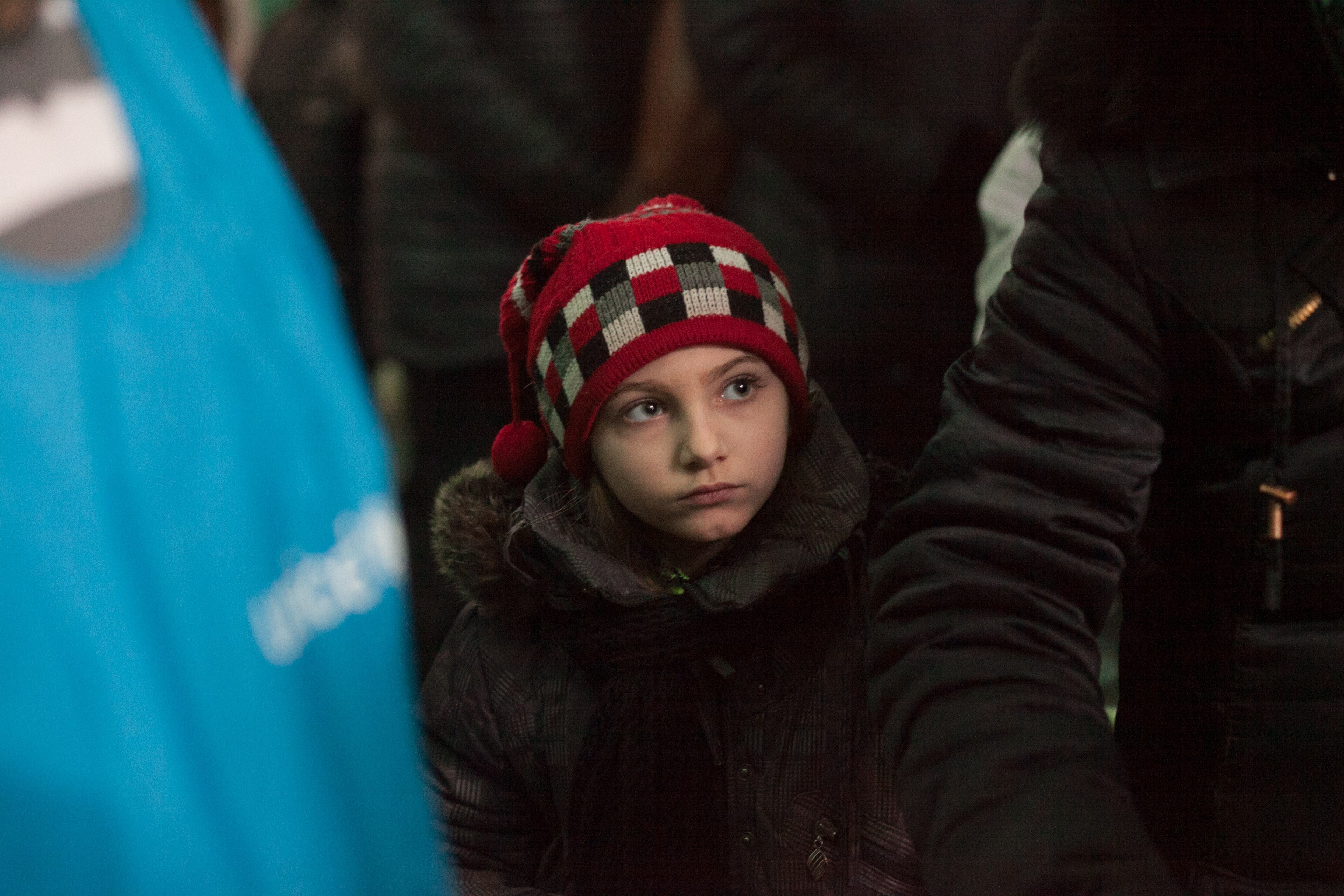
My granddaughter, Erica, like millions of Ukrainian children, will never be a child who grew up in peace.
By Sergey Maidukov
KYIV—The morning after another large-scale Russian air attack on my city, I saw a girl of about five or six years old on the subway holding a toy pinwheel.
You know the kind—a lightweight wheel that spins eagerly in the wind but remains perfectly still underground. It was yellow and blue, the colors of the Ukrainian flag.
The girl sat while her grandmother stood nearby, her face drawn and her eyes sunken.
For a while, the girl waved the pinwheel and blew on it, trying to make it spin. It remained motionless. Then she burst into tears, and it wasn’t about the toy.
“I want to go to my mother,” she repeated, looking up at her grandmother. “Take me to my mother.”
The woman picked her up, sat down, and began whispering something in her ear. The girl continued to cry. Passengers glanced at them furtively as the train swayed through the tunnel. No one knew what lay behind the scene, but it was clear that some tragedy—large or small, but devastating to the child—hid behind those tears.
The pinwheel in her hand remained perfectly still.
Looking at it, I thought how strange war can be. It changes everything around you, and yet, day after day, it often feels as if nothing changes at all.
Years had passed since the invasion began, but Kyiv and its residents seemed remarkably unchanged. People still commuted to work, stared at their screens for encouraging news, believed in victory, and waited for the war to move toward some kind of conclusion.
The frontline stood still. Peace talks were frozen. Shelling of Ukrainian cities had become commonplace.
But this stability is deceptive. Time flies.
My granddaughter, Erica, was three years old when she woke up to the first explosions near Kyiv airport. Back then, you could tell her it was thunder, and she believed you.
Now she is seven and a half. She can distinguish the sound of a thunderstorm from an air raid. When a siren sounds, she knows exactly what it means.
Until recently, Erica was partially shielded from the war. During the day, cartoons and headphones muffled the distant explosions. At night, her father would carry her to the car while she slept through the journey to a shelter. Children sleep deeply, perhaps because they believe their parents can protect them from anything.
But recently, my granddaughter woke up.
Her mother was driving her to the underground parking garage of a nearby shopping mall, where they usually waited out air raids. This time, everything went wrong.
The warning about a ballistic missile launch arrived while they were still on the road. Erica was awake. For the first time, she saw what a nighttime attack looked like.
They abandoned the car and ran beneath the stairs of a building. Above them, fiery streaks crossed the sky. The roar was deafening. Missiles were flying directly over their heads toward the center of Kyiv.
A few days later, I was walking with Erica when she pointed to a building.
“That’s where we hid that night, Grandad.”
I looked at a high-rise no different from dozens of others nearby.
“How could you recognize it?” I asked. “They all look the same.”
“I remember,” Erica replied curtly.
It wasn’t just about that night.
She will carry with her everything the war has imprinted on her through images, sounds, fears, and fragments of overheard conversations. She will never be a child who grew up in peace.
At seven, at seventeen, at seventy—she will carry the war within her for the rest of her life.
Last May, on the final day of school, a friend’s daughter came home in a sad mood. Her parents tried to cheer her up. She had finished first grade. She was becoming a big girl.
Little Marinka burst into tears, climbed onto her bed, and asked to be wrapped in a blanket.
“Like before,” she demanded. “I don’t want to be a big girl. I want to be little, like I was then, before the war.”
For Marinka, the war has lasted an eternity—more than half her life. How old will she be when it ends?
Today, the answer is nowhere in sight. Not in a year. Not in two. Not in three. The war feels eternal, unchanging, irrevocable.
Ukraine appears frozen in this state, like a yellow-and-blue pinwheel in the hand of a girl in the Kyiv metro.
And yet, it moves. Where?
Our children will find out.
Sergey Maidukov, a Ukrainian writer based in Kyiv, is the author of Life on the Run: One Family’s Search for Peace in War-torn Ukraine (2024), a book the Kirkus Review calls “a moving look at a deeply riven Russian-Ukrainian family and how they rejected Russian aggression.”

TFP IS A PROUD MEMBER OF THE IOWA WRITERS COLLABORATIVE

Honored to publish this moving essay on war and lost childhood by the Ukrainian writer Sergey Maidukov. God bless and protect him and his granddaughter, Erica, and all the children of Ukraine.
Heartbreaking. Countless similar stories from every conflict around the world. Why we must invest in preventing aggression and building the conditions for peace.